


Grant and funder reporting
Recurring reports require manual exports, spreadsheet cleanup, changing definitions, or repeated reconciliation before numbers are ready to share.
Borrowed BI helps nonprofits untangle grant, board, program, fundraising, and finance reporting when the numbers live across spreadsheets, CRMs, finance systems, and dashboards.
Nonprofits often have important reporting spread across departments, systems, and spreadsheets. The result is extra manual work and less confidence in the numbers.
Recurring reports require manual exports, spreadsheet cleanup, changing definitions, or repeated reconciliation before numbers are ready to share.

Program outcomes, service activity, and impact measures are difficult to combine consistently across teams or reporting periods.
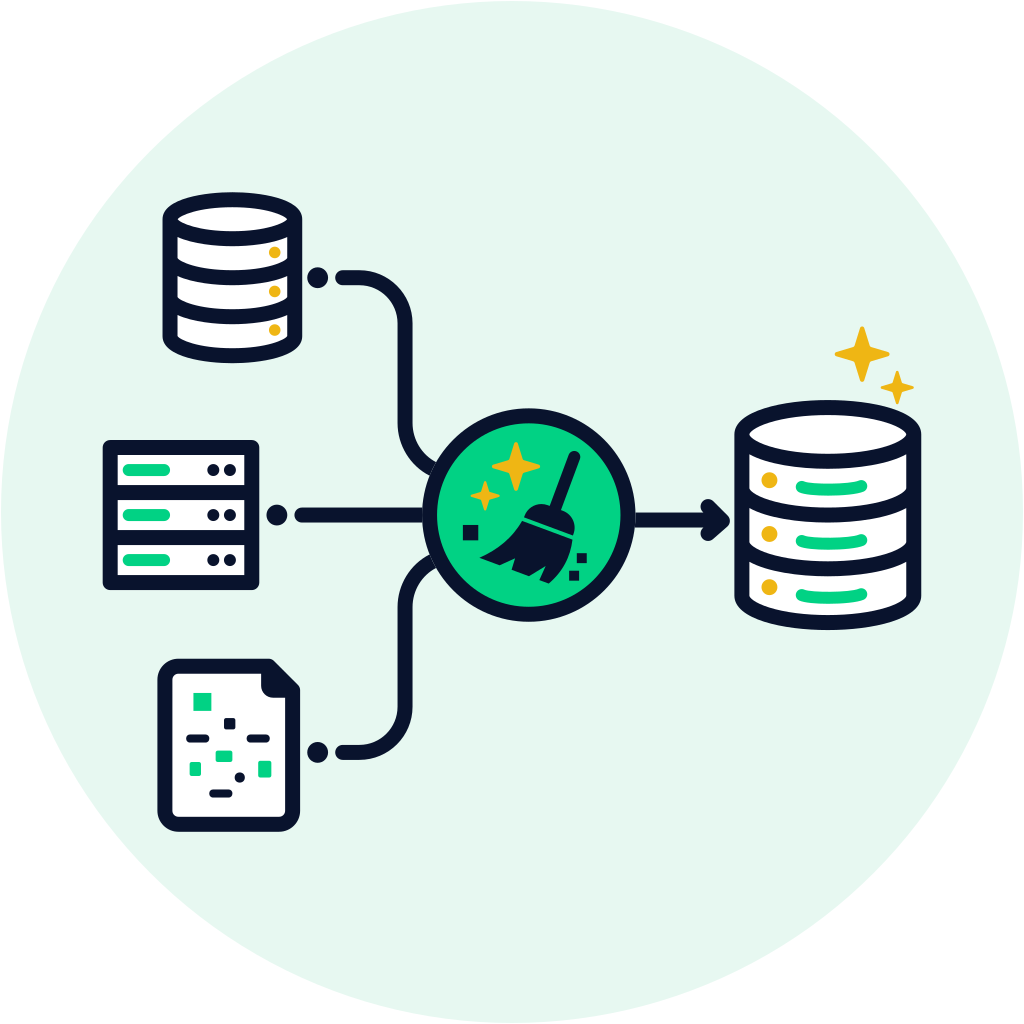
Different systems answer different parts of the same question, and teams spend too much time explaining why totals do not match.

Leadership dashboards and board packets depend on manual preparation instead of a repeatable reporting process with clear metric definitions.
Trace where numbers come from, identify conflicting definitions, document gaps, and prioritize the fixes that will improve trust fastest.
Explore the Reporting Reality Check →Address broken calculations, confusing layouts, slow performance, inconsistent filters, and data issues that make dashboards hard to trust.
Explore Dashboard Rescue →
Reduce repeated exports, copy-and-paste work, spreadsheet cleanup, and manual handoffs in recurring grant, board, finance, or program reporting.
Explore Reporting Automation →Most nonprofits do not need a massive platform overhaul as the first step. A better first move is to understand the current reporting flow, find where trust breaks down, and fix the highest-leverage problems.
Identify the systems, spreadsheets, exports, owners, and handoffs behind the reports that matter most.
Pinpoint conflicting definitions, duplicated logic, manual reconciliation, data-quality gaps, and unclear ownership.
Prioritize changes that reduce reporting effort, improve consistency, and make important numbers easier to defend.
Clarify metric definitions, ownership, reporting logic, and repeatable processes so improvements are easier to maintain.
Some organizations need one defined project. Others need ongoing support as reporting priorities change throughout the year.
Use a focused engagement for a reporting audit, dashboard repair, automation project, or cross-system reporting problem.
Explore custom BI consulting →Use fractional support when the organization needs an experienced BI resource across reporting, dashboards, data cleanup, and changing priorities.
Explore Fractional BI Support →No. Work can start with spreadsheets, exports, disconnected systems, or an incomplete data environment. The first step is understanding what is creating the reporting problem and what can be improved with the systems you already have.
Yes, when the problem is the reporting process, data logic, metric consistency, reconciliation, or repeatable production of the report. Borrowed BI does not provide grant-writing services.
Yes. Nonprofit reporting often depends on information from fundraising, finance, program, CRM, survey, and spreadsheet-based processes. The work can focus on how those sources should come together for reporting without requiring every system to be replaced.
That is a common fit for Borrowed BI. The work is designed for organizations that need experienced BI support but may not need, or be ready for, a full internal BI team.
If the reporting problem is not yet clearly defined, start with a Reporting Reality Check. It is designed to identify what is broken, what matters most, and what should be fixed first.